Resistive touch screens were first invented in 1971 by Dr. Samuel G. Hurst. He calls the sensor the Elograph, after his company, Elographics.
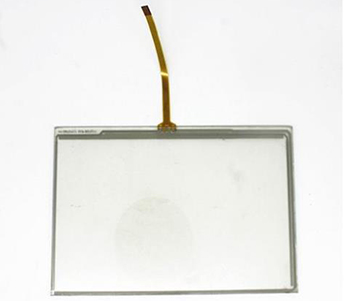
As the name suggests, resistive touch LCD screens work by applying pressure to the LCD screen. A resistive touch screen consists of several thin layers. These layers consist of a glass panel on the bottom, followed by two resistive circuit layers coated with a thin conductive layer of metal such as ITO with a small gap of spaced dots in between.
When pressure is applied to the screen with a finger or stylus, the outer resistive layer is pushed against the inner layer. The two metal conductive layers come into contact, causing a return circuit and a change in resistance in the vertical and horizontal axes. This change is detected by sensors located on the edge of the screen, and then the exact position is found through horizontal and vertical coordinates to indicate the touch point.
1. The lowest production cost: Resistive touch screen is relatively easy to manufacture due to its simple structure, and the resistive touch screen cost is lower compared with other LCD touch technologies.
2. Any object can be activated: As mentioned above, any object that can exert pressure on the resistive touchscreen display will trigger a touch action and be detected by the resistive touch sensor. This characteristic makes resistive touchscreens the preferred choice in industrial and medical environments where operators may use gloves on LCD touchscreens.
3. Insensitivity to stray stimuli: The way resistive touch screens detect touch actions determines that liquid spills/snow or surface contaminants will not cause unexpected reactions on the touch screen, which is very important for industrial and outdoor environments.
4. No risk of glass shattering: Most LCD touch screen technologies use glass as the outer touch layer. This is usually not allowed in food and beverage facilities to avoid contamination from broken glass. Resistive touch screens use a tough polycarbonate outer layer that holds broken glass should the LCD screen break.
5. Low power consumption: Resistive touch screen consumes little power.
6. Not sensitive to EMI/RFI: The resistive touch screen detects the change of resistance to locate the coordinates of the touch. This is insensitive to EMI/RFI.
Resistive touch screens have been widely used for many years and are a proven and trusted solution for building human-machine interfaces.
 Industrial LCD Screen PK Ordinary LCD ScreenDecember 9, 2022At present, the power consumption of liquid crystal displays is already very low, so they are loved by people in many applications, and are widely used in many sophisticated and long-lasting electroni...view
 Reasons for Color Difference in TFT LCD ScreensMay 26, 2023Clients often ask us why there are color differences in the same model TFT LCD screens. Color difference in TFT LCD screens refers to the difference in color between two LCD screens of the same model ...view
 TE Signal of TFT Display ModuleMarch 31, 2023The background of TFT display moduleTFT displays with MCU interface generally have an interface with the "TE" signal. The TE signal is an output interface that can provide normal display eve...view
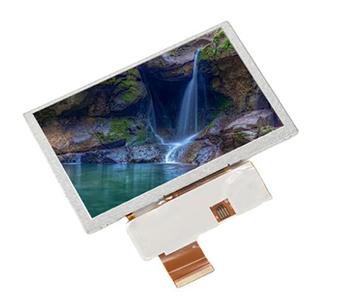 Do You Know What Types of LCD Displays Are There?September 26, 2022As the mainstream technology in the display industry, LCD display has several types, each with different characteristics.Ⅰ. TN LCD module panel: The biggest feature of TN is that the price is relativ...view
 Medical Marvels: TFT Display Touch Screens in Healthcare EquipmentDecember 8, 2023In the ever-evolving landscape of healthcare technology, innovations continue to shape the way medical professionals provide care. One such marvel that has made significant strides is the integration ...view
 "Tips for Designing PCB Layouts for 12-Pin LCD Display"May 9, 2024When designing electronics, PCB (printed circuit board) layout is a critical job, especially for boards with integrated 12-pin LCD display. Reasonable PCB layout can not only improve product performan...view
 Call us on:
  Email Us:
  2F-M1 XiaWei Industrial Park, GuanLan, LongHua District, SZ, China
  www
www