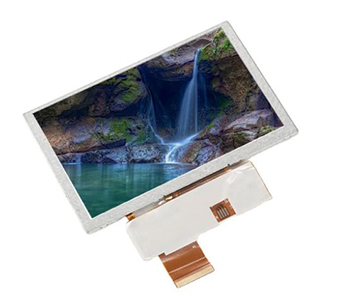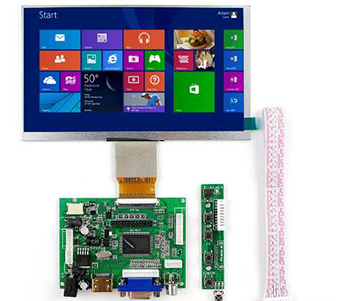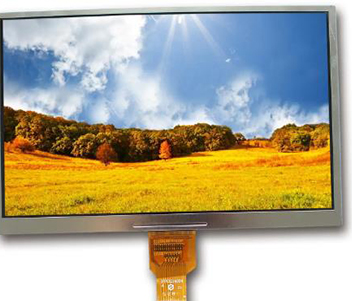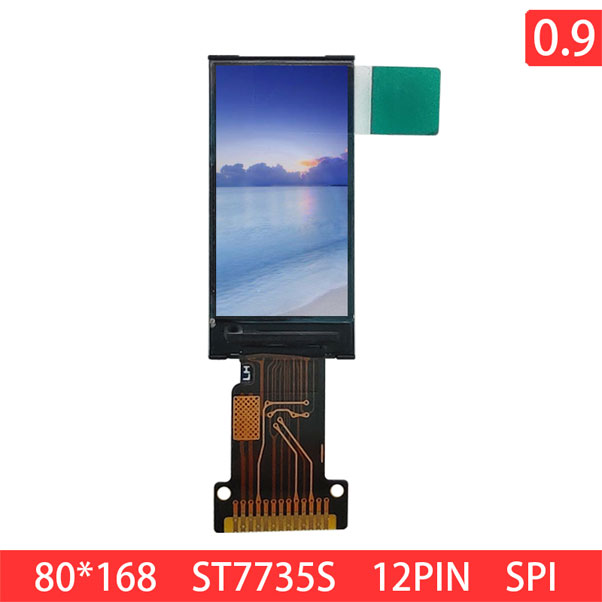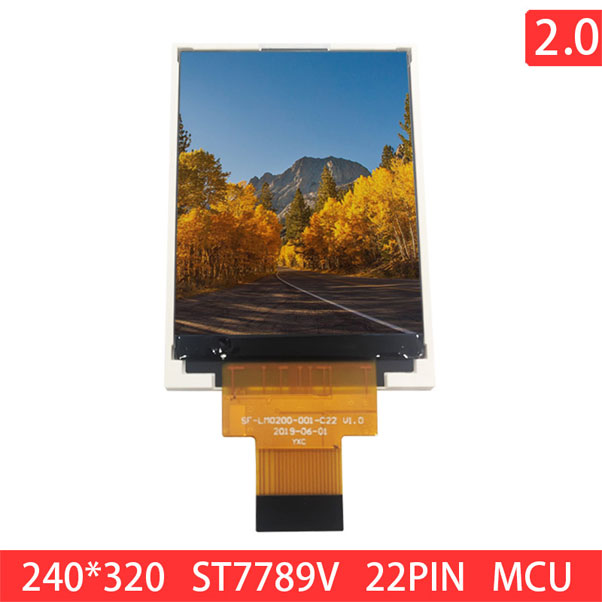
When we use display devices such as mobile phones, car displays, and home appliances, do we sometimes feel that there are lines scrolling up and down on the screen? Sometimes the screen even flickers? Yes, this is the flickering phenomenon of LCD SPI displays. Below, we will explain the reasons, principles, and solutions of LCD SPI screen flickering in three aspects.
There are many reasons for the LCD SPI screen flickering, roughly including
The screen flickers due to the frequency of the LCD SPI screen and the ambient light source being similar. Because most of the time the frequency of the screen light source and the environment light source are different, but it is not excluded that it may cause screen flicker by coincidence.
The flashing screen phenomenon caused by poor matching of the LCD SPI screen module and the device motherboard.
The backlight of the LCD SPI screen causes screen flicker, which is the most common cause of screen flicker.
We know that the backlight of an LCD SPI screen is mainly divided into two types: one is LED backlight, which uses LED (light-emitting diodes) as the backlight source of the LCD display screen. The other is CCFL backlight, which uses CCFL (cold cathode fluorescent lamp) as the backlight source of the LCD SPI screen.
Compared with traditional CCFL backlight, LED backlight has the characteristics of low power consumption, low heat generation, high brightness, and long life. In terms of market share, LED SPI backlight is now mainstream, and the backlight used in various LCD display fields such as household appliances, car displays, and digital products is mostly LED backlight. However, LED backlight is not without disadvantages. The phenomenon of flickering is more likely to occur when using a display screen with LED SPI backlight. Especially for some customers who are more sensitive to the eyes, this kind of flicker is not friendly. Over time, it will cause eye soreness and other phenomena. So, is this entirely LED backlight's fault? In fact, the key reason for LCD SPI screen flicker is PWM dimming.
So what is PWM dimming? We know that the brightness of LED backlight is a fixed value. To adjust the brightness of the LCD screen, the LED backlight is continuously turned on and off. By adjusting the length of the on and off durations, the brightness of the display screen is adjusted. When users adjust the brightness, they are actually adjusting the length of the backlight turning on and off, and this adjustment method is called PWM dimming.
In the actual application of display products, the switch time from LED backlight on to off is very fast, and the working frequency of display products using PWM dimming is 200Hz-1000Hz. When the frequency reaches 100Hz, the human eye hardly perceives the brightness changes, and the picture we see is always bright.
In fact, CCFL backlight also uses PWM dimming, but CCFL is essentially a cold cathode fluorescent lamp tube, and the process of electrons hitting the phosphor to form a light spot in the fluorescent lamp tube has a delay effect, causing residual light effects. Therefore, the flashing screen situation of CCFL backlight is relatively better. Although LCD backlight has flickering problems, it is mainly evident in low brightness, so it will not change its mainstream position as a backlight.
One of the solutions to LCD SPI screen flickering caused by the backlight is to use high-frequency PWM dimming. As we mentioned earlier, the working frequency of common LCD display products is 200Hz-1000Hz. For some LCD display fields with particularly strict display requirements, the working frequency can be increased to 5000Hz or even higher, which can make the human eye unable to perceive the flicker of the screen and eliminate the problem of LCD screen flicker.
However, high-frequency PWM dimming needs to be moderate, and the optimal solution should be based on the product's own needs, comprehensive consideration of cost, display effect, and other factors.
 The Difference between OLED and TFT DisplaysDecember 9, 2022OLED is one of the hottest concepts in the current display industry, and OLED itself has many advantages. For another concept in the real industry - TFT, perhaps not so many people know about it. Toda...view
 Reasons for Color Difference in TFT LCD ScreensMay 26, 2023Clients often ask us why there are color differences in the same model TFT LCD screens. Color difference in TFT LCD screens refers to the difference in color between two LCD screens of the same model ...view
 Advantages of WUXGA TFT Display Over Traditional Screen TechnologiesMay 9, 2024As technology continues to advance, display technology is also changing rapidly. In many screen technologies, WUXGA (Wide Ultra Extended Graphics Array) TFT (thin-film transistor) display with its uni...view
 The Role of Touch Panel Modules in Modern DevicesJanuary 25, 2024In today's fast-paced world, technology plays a vital role in our everyday lives. From smartphones to tablets and even refrigerators, the integration of touch panel modules has revolutionized the ...view
 Enhancing Your Drive: The Power of Car LCD ModulesOctober 23, 2023In today's technology-driven world, our cars are becoming more than just a means of transportation. They are evolving into sophisticated hubs of connectivity, entertainment, and information. One o...view
 Integrating Industrial TFT Display with Embedded SystemsMay 9, 2024With the development trend of industrial automation and intelligence, the integration of industrial TFT display and embedded system has become the key to improve the efficiency of human-computer inter...view
 Call us on:
  Email Us:
  2F-M1 XiaWei Industrial Park, GuanLan, LongHua District, SZ, China
  www
www