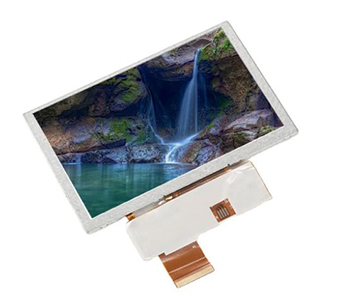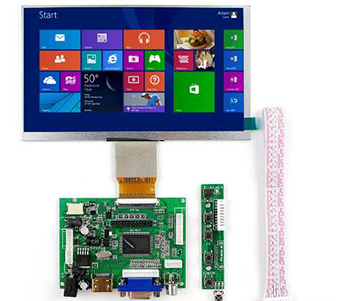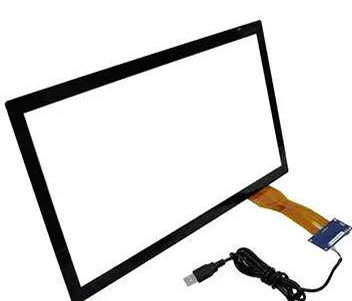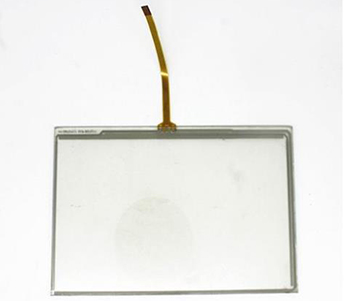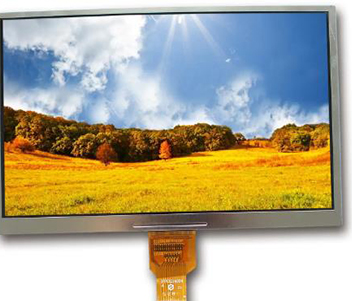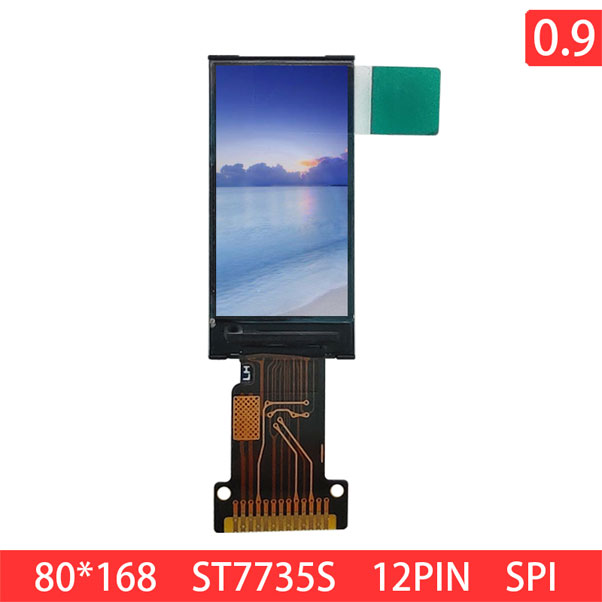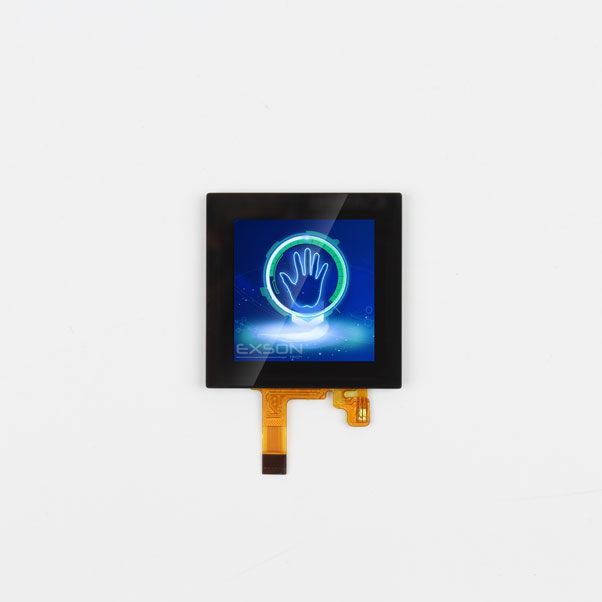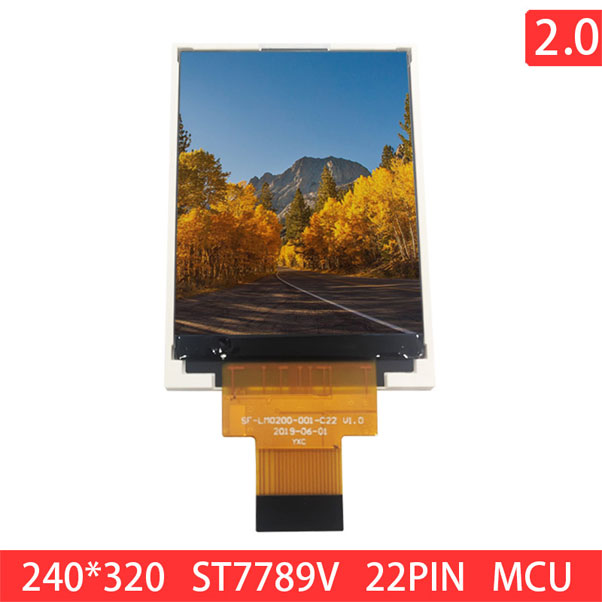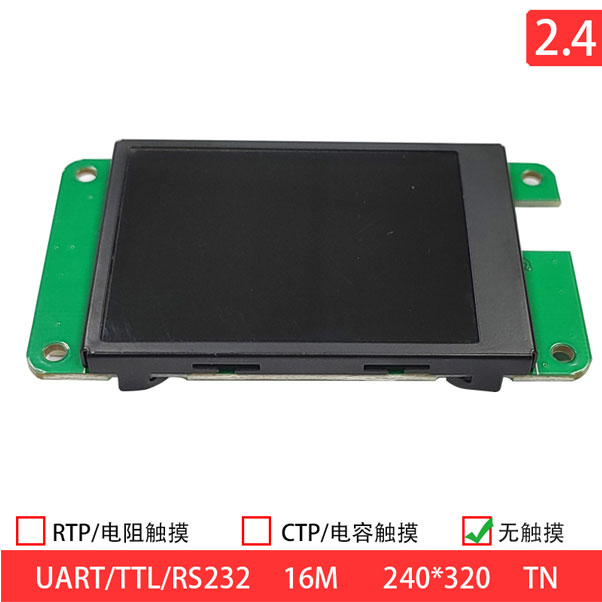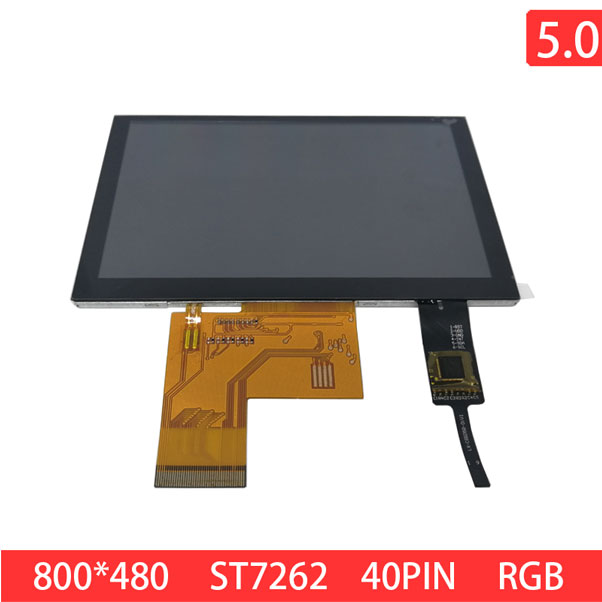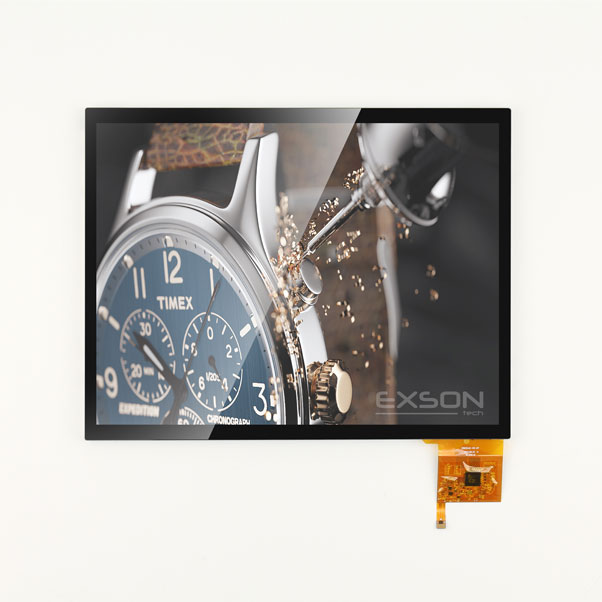
Resistive LCD is an inductive liquid crystal display device capable of receiving input signals from contacts and other inputs. The resistive LCD locates the touch point through the pressure difference between two layers of conductive materials (such as ITO coatings). These two layers of materials are respectively coated on the opposite surfaces of a film and glass. When a touch operation occurs, the ITO under the film can contact the ITO coating on the glass layer, resulting in a change in resistance, which then triggers signal transmission and processing.
Simple structure, lower cost
Can be activated by any object that applies pressure due to its pressure-applying function
Resistant to water/dirt
Lower power consumption
Different input methods
Resistive LCD supports multiple methods such as fingers, styluses, or other objects that apply pressure, while capacitive LCD display only supports body touch.
Different surface materials and durability
Resistive LCD is film+glass, capacitive is glass+glass/glass+film; surface hardness differs, resistive is easily damaged when cracked, while capacitive can still work with small cracks.
Different anti-interference abilities
Capacitive LCD display is more sensitive and thus has poorer anti-interference abilities.
Touch detection
When a user touches the screen with a finger or other object, the two layers of conductive materials contact at the touch point, causing a change in resistance at that point.
Signal transmission
The change in resistance is detected by sensors and converted into electrical signals, which are then transmitted to the processor via conversion circuits.
Position calculation
The processor receives the signals and performs computations to determine the exact location of the touch point (X, Y coordinates).
Interface response
Based on the location information of the touch point, the system drives the corresponding connected devices or software interfaces to complete the user's operational instructions.
 Exson Tech In-Vehicle LCD Module: Leading a New Chapter in Automotive DisplaysJuly 1, 2024In today's rapidly developing automotive industry, in-car displays have become a key element in enhancing the driving experience and intelligent level. Among many in-car display technologies, LCD ...view
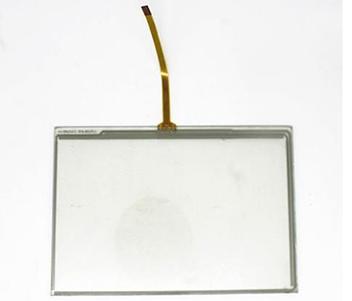 What Are the Advantages of Resistive Touch Screen?February 8, 2023Resistive touch screens were first invented in 1971 by Dr. Samuel G. Hurst. He calls the sensor the Elograph, after his company, Elographics.Ⅰ. What is a resistive touch screen?As the name suggests, ...view
 How the TFT display worksDecember 9, 20221. How does TFT display work?How does TFT display work? TFT is the abbreviation of Thin Film Transistor, which generally refers to thin film liquid crystal display, but actually refers to ...view
 Innovate and Impress: Custom LCD Display Modules for Your BusinessOctober 23, 2023In the ever-evolving landscape of business, staying ahead of the competition often requires a touch of innovation and a dash of uniqueness. One way to set your brand apart is by embracing custom LCD d...view
 Implementing Multi-Touch Technology in Industrial TFT DisplaysMay 9, 2024With the continuous development of industrial automation, industrial TFT display, as the key equipment for human-computer interaction, are expanding their functions. As an advanced interaction method,...view
 Advantages of WUXGA TFT Display Over Traditional Screen TechnologiesMay 9, 2024As technology continues to advance, display technology is also changing rapidly. In many screen technologies, WUXGA (Wide Ultra Extended Graphics Array) TFT (thin-film transistor) display with its uni...view
 Call us on:
  Email Us:
  2F-M1 XiaWei Industrial Park, GuanLan, LongHua District, SZ, China
  www
www